41Convergence inter-écoles #2
16
rue Pierre Bourdan
75012 PARIS
Informations
Private event for the schools. Only by invitation.
Inter-School Convergence #2 continues its mission to bring French jewelry schools closer together on the occasion of PARCOURS BIJOUX 2026.
This year, with support from FRANCÉCLAT and hosted for the second time by the École Boulle, 10 French jewelry schools are pooling their talents to challenge preconceptions and explore the common ground in their practices. On October 16, 2026, five collaborative projects, led by pairs of schools, will be unveiled during a private event at École Boulle. This is a unique opportunity to immerse yourself in the diversity and innovation of jewelry education. Stay tuned on the PARCOURS BIJOU website and on social media.
Artists
Boulle School offers a comprehensive jewelry arts program, ranging from the vocational certificate (CAP) to the DNMADE (National Diploma in Crafts and Design, equivalent to a Bachelor’s degree). After secondary school, the curriculum adopts a more contemporary approach to jewelry design.
The DN MADE program spans six semesters and trains students in jewelry and accessory creation, design, prototyping, and production.
The curriculum combines traditional craftsmanship with modern tools and technologies, including 3D modeling, 3D printing, 3D scanning, and laser cutting, within a design-led project methodology. This approach encourages experimentation, independence, and the development of a personal creative vision. In their final year, students undertake a self-directed graduation project based on a topic of their choice, exploring contemporary issues in jewelry, related fields, or traditional practices.
The Haute École de Joaillerie, the oldest jewelry school in the world, was founded in 1867 by professionals from the jewelry industry. Its unique and longstanding connection with the profession has made it one of the cornerstones of French craftsmanship transmission. For more than 155 years, the Haute École de Joaillerie has trained generations of jewelers, high jewelers, goldsmiths, gemologists, designers, and CAD specialists, who now work in the world’s most prestigious jewelry houses and workshops. Recognized as a benchmark institution across the industry, the School is organized into three departments: initial training, apprenticeship programs, and continuing professional education.
SEPR, a vocational school engaged in the fields of creation and design, coordinates the European project MOSAIC.The
Bachelor program in Contemporary Jewelry and Precious Objects operates alongside three other Bachelor’s courses and
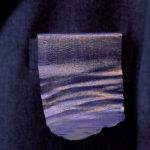
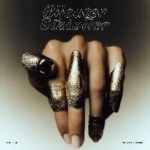
BTS Photography program. This proximity fosters cross-disciplinary projects, such as the photoshoot for the “Haïku” jewelry
collection, produced in the school’s studios as part of the “Convergence inter-écoles du Parcours Bijoux” initiative. Our
approach encourages a broad exploration of jewelry and precious objects. It fosters a critical perspective on societal issues
and cultivates an exploratory, reflective process regarding materials, manufacturing techniques, and the connections jewelry
establishes with the body, otherness, and the environment. Studio tutors : Laurence Oppermann, Fabienne Rozanski,
Alexandra Melillo, Florence Croisier, Ambroise Degenève.
For nearly 50 years, the Institut de Bijouterie de Saumur, a school of the Chamber of Commerce and Industry of Maine-et-Loire, has supported apprentices, trainees, and students in their professional development within the jewelry sector, by developing their technical skills (jewellery making, gemology, engraving, stone setting, polishing, silversmithing, lapidary work) as well as their personal talents. Within the DN MADE Object – Jewelry specialization, students explore jewellery as an object of creation, research, and reflection—a field of experimentation where they question its functions, uses, history, symbolic dimension, and its place in contemporary societies. Through artistic projects, cultural collaborations, interdisciplinary workshops, and partnerships such as Résonance with the Museum of Modern Art of Fontevraud, they develop a creative, critical, and sensitive approach, driven by innovation and mastery of craftsmanship.
Our School of Jewellery is located in Ploërmel in Brittany, it was established in 2002. Our school is housed in a unique setting, the former Ploërmel railway station, which has been transformed into dedicated workshop spaces. We offer a two-year training programme leading to the CAP in Jewellery Arts and Techniques, as well as an in-house diploma equivalent to the technical level of the BMA. Tuition is funded either by the Brittany Regional Council (as part of its Lifelong Learning programme) or through individual funding. The training is funded by the Brittany Region (Lifelong Learning program) or through individual funding.
Our training program totals 2,500 hours. 80% of the training pathway is workshop-based and focuses on practical skills, comprising 1,600 hours in the workshop and 420 hours of company internships. The training is complemented by related theoretical studies : research, gouache art, technical drawing, 3D software, the history of jewelry art, the history of
goldsmithing, and gemology.
The OBiMaU DNMADe program (Objects, Jewelry : materials and uses) rests on two pillars.The curriculum explores the innovative potential of materials and the techniques used to work with them, encompassing both traditional and contemporary methods (such as fold-forming, mokume-gane, anticlastic raising, enamel, chasing, casting, ceramics, glass, leather, woodturning, marquetry, polymers, 3D scanning and printing, laser cutting, etc.).They are also grounded in the analysis of user practices and lifestyles, as jewellery and, more broadly, body adornment, through its intimate relationship with the body, gives tangible form to the issues and aspirations of a constantly evolving society.
Located in Graulhet in the Tarn department, the Lycée Polyvalent Clément de Pémille offers jewelry-making programs ranging from the BNMA to the DN MADe, in addition to a one-year CAP program. The DN MADe Objet – Contemporary Jewelry, which blends traditional craftsmanship with digital technology, is a three-year program that trains designers capable of combining jewelry-making expertise with innovation. The curriculum includes: 3D design, prototyping (3D printing, laser cutting), traditional techniques, design and craft culture, through projects and workshops with professionals in the arts and crafts sector. The program emphasizes experimentation with materials, eco-design, and the personal identity of the designers as expressed in their collections. Modern, well-equipped studios, personalized support, internships, and dynamic international opportunities (Erasmus+) open the door to a personalized career path or further studies.
As part of a higher education department in design including four specialisations, one Arts and Design preparatory course (CPGE) and one DSAA, the Bachelor Product design – Scripting / Designing / Manufacturing offers a methodical and multifaceted approach to the design profession. Through professional and inter-institutional partnerships, the programme encourages students to take on a leading role by developing skills in analysing user scenarios focused on the user and the context, alongside design skills that are always combined with experimentation and fabrication skills.
From Jewel to Manipulable Object – Atelier Bijou at Haute école des arts du Rhin, Strasbourg.
Whether object of power or popular art, the jewel, small piece of materiality, is a transportable art that take place on the body ! The Jewelry Studio is part of the Art/Object program within the Art Department, alongside the Ceramics, Glass, Metal, Wood, and Book studios. Some of these studios date back to the founding of the School of Decorative Arts in 1892 (now the Haute École des
Arts du Rhin, HEAR). Together, they have developed a cross-disciplinary approach to teaching within the field of contemporary sculpture, exploring practices that range from the object to the installation. In this context, students in the jewelry studio investgate and create unexpected responses at the scale of the body by experimenting traditional and contemporary techniques.
The École Nationale Supérieure d’Art et de Design de Limoges is one of ten National Art Schools operating under the direct supervision of the Ministry of Culture. Contemporary jewellery has been a fully-fledged academic discipline there since 2007. It is offered to students specialising in art or design through courses and workshops from the first year onwards. As part of the DNA (BA degree), this discipline forms part of students’ personal projects, alongside other areas of research developed
during their studies. During the DNSEP (MA degree), students may choose jewellery as their main practice. In both cases, it is possible to apply for the ‘Contemporary Jewellery’ specialisation to enhance their degree.
POPatelier BIJOU is a studio where research is conducted into the complex evolution of body ornamentation and adornment. An artistic space at the crossroads of art and design, where students shape their visual and theoretical research whilst asserting their personal positions and visions. They explore what jewellery has always been and remains today: adornment, an interface between the private and the public.